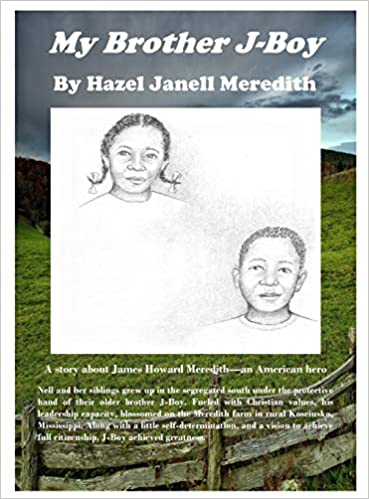
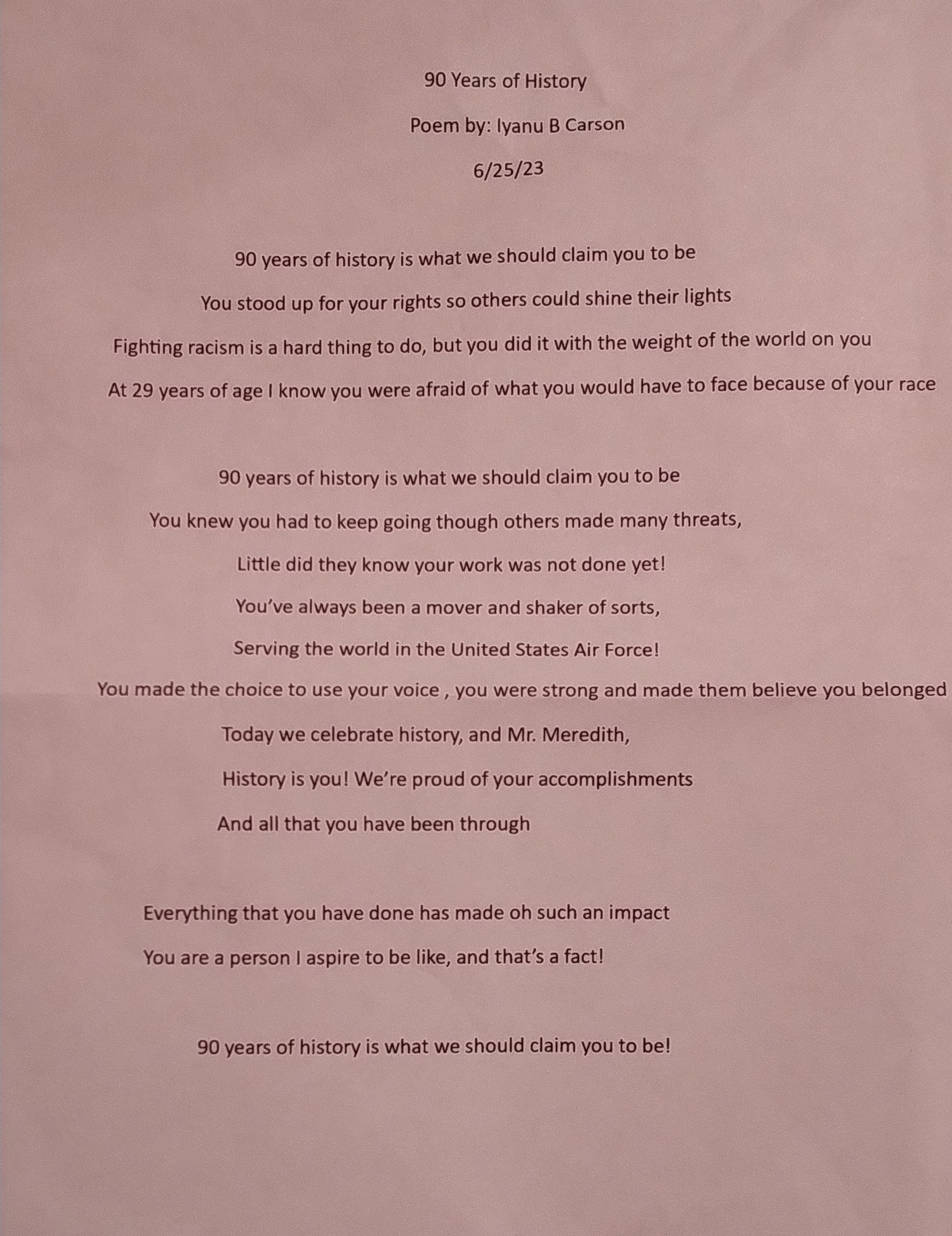
Honoring James Howard Meredith who broke Jim Crow barriers at the college level in Mississippi on September 30, 1962.

On September 30, 1960, JFK, RFK, and Governor Ross Barnett negotiated a plan to allow James Meredith to become a resident on the Campus of Ole Miss.

President Kennedy announced Meredith’s residence to the nation via a television press conference September 30, 1962.

The Klan and segregationists began entering the campus during day light hours September 30, 1962. U.S. Marshals were on campus. A riot which had been incited by Governor Ross Barnett turned into a full insurrection. JFK called in the National Guard and the army. The army had never been utilized to protect the rights of a citizen.

Two people were killed, and nearly 200 were injured during the Insurrection on the campus of the University of Mississippi, September 30, 1962.

October 1, 1962, James Meredith attended his first class at the University of Mississippi.

He graduated on August 18, 1963, obtaining a bachelor’s degree in political science.  The U.S. Marshals escorted Meredith and a caravan of supporters to Memphis.

One of the government’s officials informed Meredith he was on the Klan’s hit list and recommended he move out of the state.

Meredith relocated to Nigeria and enrolled in a master’s degree program. He obtained a master’s degree in government and economics from the University of Ibadan in 1965.

He and his family moved to Manhattan, and he enrolled in law school at Columbia University in 1965. His first wife Mary June Wiggins Meredith became a local schoolteacher.

On June 5, 1966, James Meredith started “Meredith Walk Against Fear,” a 225 mile walk from the Tennessee-Mississippi line on Highway 51 to Jackson with 16 men. Some were from Memphis and a few travelled from NY.

Meredith sough to encourage blacks to register to vote, and to show black men they had nothing to fear by walking the highways and byways in Mississippi.
Core Themes Meredith Coleman McGee Speaks About

⭐ Core Themes Meredith Coleman McGee Speaks About

Across her books, public talks, and interviews, she consistently returns to several intertwined subjects:

1. Mississippi History & Black Cultural Memory

She writes and speaks extensively about Mississippi’s cultural landscape — especially its literary, musical, and civil rights heritage.

  • Her biography James Meredith: Warrior and the America That Created Him centers on her uncle’s historic integration of Ole Miss and the broader struggle for Black educational access.
  • She contributes to Black History Month programs and is frequently spotlighted in Mississippi Black Arts features.

2. Music History — Especially Billie Holiday & Mississippi Blues

Music is one of her strongest through-lines.

  • She authored Billie Holiday: Jazz Singer, often giving talks about Lady Day’s artistry and cultural impact.
  • Her book Mississippi Blues: 1900–2025 reflects her deep engagement with the state’s musical lineage.

3. Family History & Personal Narrative

She is a family historian and often discusses:

  • Her lineage (Meredith, Sealey, Coleman surnames) and the stories of her parents and siblings.
  • Her late husband, William Earl McGee Jr., and the role of family in shaping her life’s work.
  • Her memoir Every Inch Love Will, which blends personal reflection with cultural commentary.

4. Literacy, Community Activism & Early Childhood Education

She chairs Community Library Mississippi, organizes poetry contests, and advocates for literacy as a foundation for empowerment.

  • She emphasizes that early childhood learning begins at home.
  • She promotes community reading groups and book festivals.

5. Writing Craft, Publishing, and the Business of Books

Her talks often include:

  • How she became a writer during the crack epidemic while running a convenience store.
  • Her evolution from fiction reader to journalist to publisher.
  • Practical guidance on résumé writing, editing, and independent publishing through Typing Solutions Résumés & Etc.

6. Children’s Literature & Civic Education

Her Nashida series teaches Mississippi government and history to children.

  • Titles include Nashida: Visits the Mississippi State Capitol and Nashida: Visits Mississippi’s Old Capitol Museum.

⭐ How She Talks: Style & Perspective

Across interviews and book talks, she tends to speak in a voice that is:

  • Historically grounded — connecting personal stories to broader cultural movements.
  • Community-centered — emphasizing literacy, local arts, and intergenerational knowledge.
  • Reflective — weaving her own life experiences into discussions of Mississippi identity.
  • Educational — especially when discussing children’s books, civic history, or writing craft.

Review of Mississippi Blues: 1900-2025

Copilot Search Branding

Review of Mississippi Blues: 1900–2025 by Meredith Coleman McGee

Mississippi Blues: 1900–2025 is a sweeping, century-spanning history of the blues, tracing its roots from the early 20th century to the present day. Authored by Meredith Coleman McGee, with foreword by Alfonzo White, the book offers a rich narrative that blends personal stories, cultural context, and musical history Amazon+1.

Scope and Content
The work begins with the legendary Charlie Patton, known as “The First Rock ‘n’ Roller” and “Grandfather of the Blues,” and other early pioneers. It then focuses on Jackson, Mississippi’s elder bluesmen—Bobby Rush, King Edward, and Jesse “Guitar” Robinson—whose lives and music form the heart of the narrative Amazon+1. Alongside these figures, McGee profiles well-known artists such as David “Honeyboy” Edwards, Muddy Waters, Howlin’ Wolf, and Jimmy “Duck” Holmes, while also introducing dozens of lesser-known musicians whose contributions helped sustain the tradition Amazon+1.

Style and Approach
The book moves fluidly between intimate biographical sketches and broader cultural commentary, capturing the evolution of blues from its rural, downhome origins in juke joints and street corners to its electrified, urban festival form Amazon+1. McGee’s prose is accessible yet detailed, making it appealing to both casual readers and serious music historians.

Themes and Significance
It explores the intersection of tradition and innovation, the resilience of African American musical expression, and the role of Mississippi as a crucible for blues innovation. The work is praised for its ability to place local legends within the wider American music narrative, offering a “tribute and a revelation” for anyone drawn to the soulful echoes of Mississippi’s past and present Amazon+1.

Audience and Value
This is a valuable resource for blues enthusiasts, music students, and cultural historians. It serves as both an educational reference and a compelling read, offering insight into the people, places, and events that shaped the blues. Its comprehensive coverage and human-centered storytelling make it a standout in the genre.

In summary: Mississippi Blues: 1900–2025 is a well-researched, engaging, and deeply respectful exploration of a vital American art form, blending biography, history, and cultural analysis into a single, enduring volume Amazon+2.

Meredith Coleman McGee to serve on “HOW TO WRITE RIGHT NOW!”panel this evening

FIND YOUR VOICE WRITE YOUR STORY