NEWS: Community Library Mississippi’s board and volunteers distributed 147 copies of My First Book Series and My Picture Dictionary to early learner in its first 8 months of operation (July 2019 to Feb. 2020). We sell these resources too. Proceeds support our book giving program.
NEWS: Japanese readers have been downloading My Picture Dictionary since July of 2019. Parents and grandparents across the nation use this resource in their homes. My First Book Series is incorporated into the curriculum of day care centers. The print edition of My Picture Dictionary is in the library of early learning hubs.
NEWS: A black and white print edition of My Picture Dictionary was recently released. It retails for $5.98.My First Book Series is on sale for $11.98 (six volumes 208 pages).
New black and white edition of My Picture DictionaryMy First Book Series sale price $11.98 (six volumes – 208 pages)
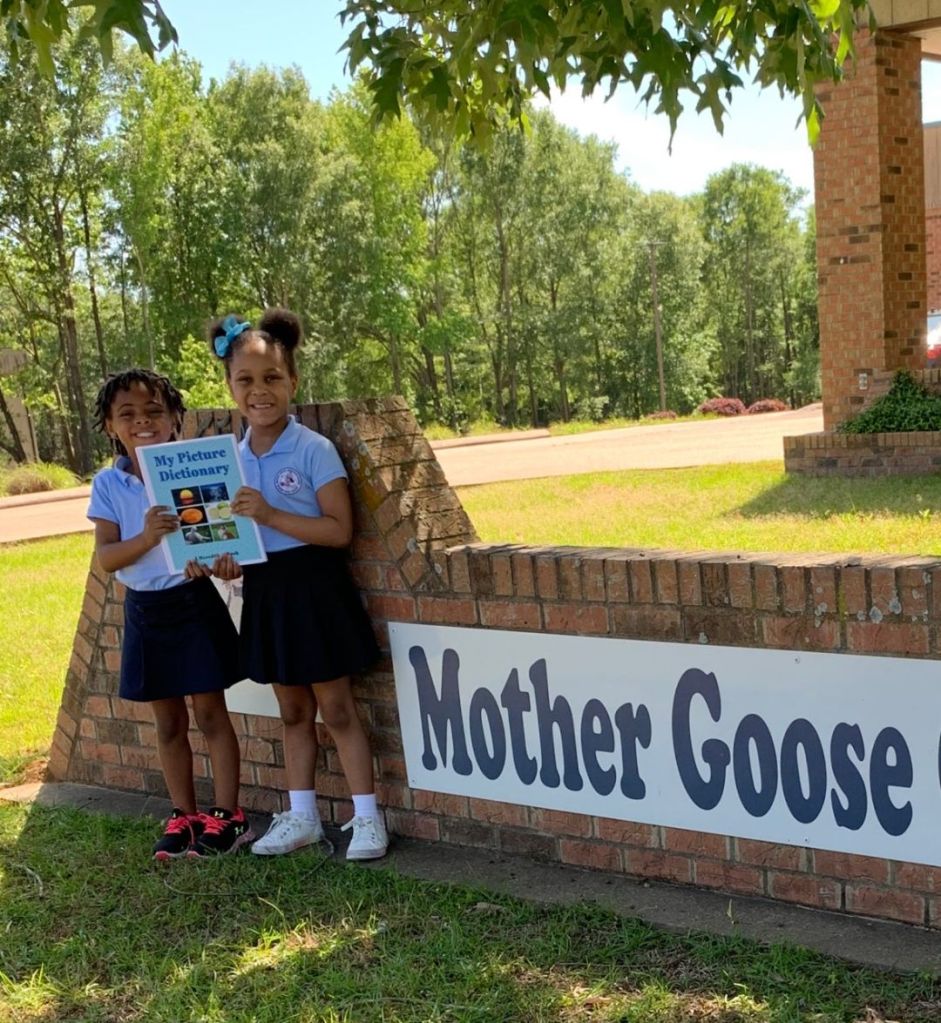
Mother Goose Christian School preschoolers, Watkins Dr. Jackson, Mississippi, pose with “My Picture Dictionary.”
The Community Library Mississippi’s board of directors are pleased Mother Goose Christian School added My Picture Dictionary, a reference book for early learners, to its library. Mother Goose is known for providing outstanding educational services.
Note: A Japanese retailer recently downloaded over 100 My Picture Dictionary eBooks.
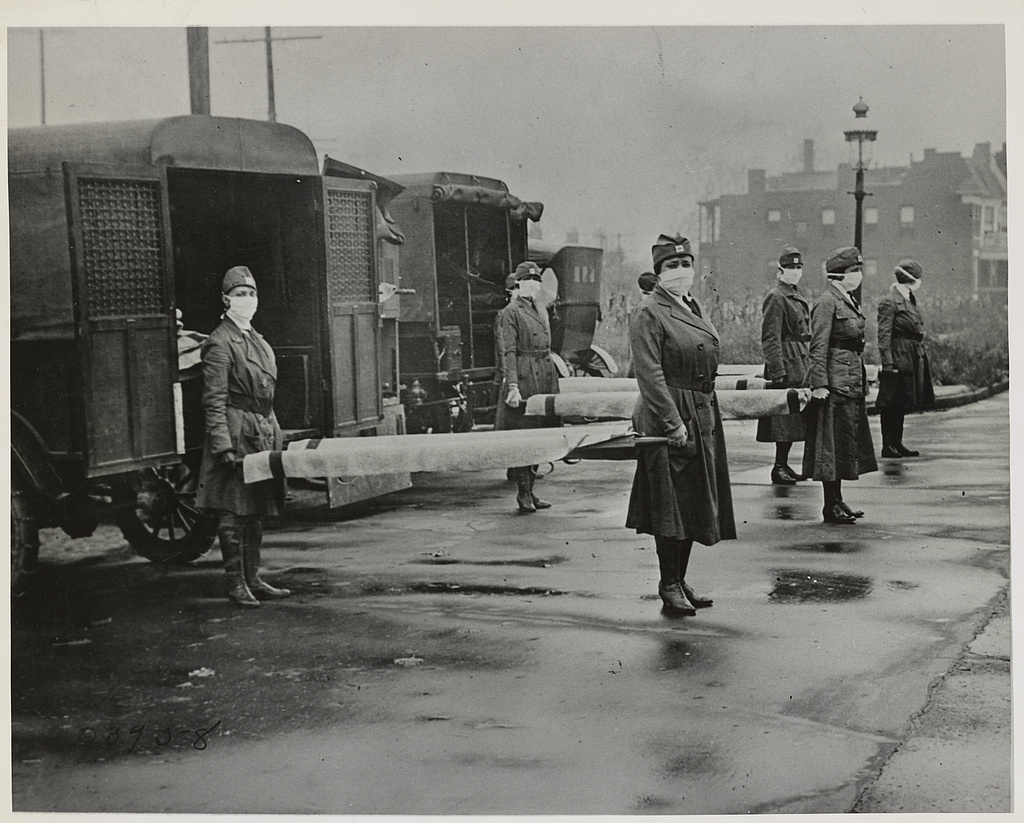
1918 Red Cross during the Influenza Flu Pandemic. Photo Courtesy Library of Congress
Citizens wore flu masks in public. Citizens had to have on mask to ride street cars. Some made homemade masks. There were three waves of the virus. The virus took the lives of 750,000 USA citizens.
1918 Flu Pandemic spread worldwide during 1918-1919. In the United States, it was first identified in military personnel in spring 1918. Barbers wore face coverings. People also wore homemade masks.
It is estimated that about 500 million people or one-third of the world’s population became infected with this virus. The number of deaths was estimated to be at least 50 million worldwide with about 675,000 occurring in the United States. In the US, the disease devastated cities, forcing law enforcement to ban public meetings, shut down schools, churches, and theaters, and even stop funerals.
When the 1918 influenza epidemic began its deadly tour across the United States, African Americans were already beset by a host of major public health, medical, and social problems that shaped how they experienced the epidemic and how the epidemic affected them. By 1918, medical and public health reports had documented that African Americans suffered higher morbidity and mortality rates than white people for several diseases. The Atlanta Board of Health, for example, reported in 1900 that the black death rate exceeded that of the white death rate by 69%.2 In an analysis of the 1900 census, W.E.B. Du Bois, the influential sociologist and civil rights activist, found that African American death rates were two to three times higher than for white people for several diseases including tuberculosis, pneumonia, and diarrheal disease. Although African Americans had lower rates for scarlet fever, cancer, and liver disease, Du Bois concluded, “The Negro death rate is, however, undoubtedly considerably higher than the white.”3https://www.ncbi.nlm.nih.gov/pmc/articles/PMC2862340/ Full article Public Health Rep. 2010; 125(Suppl 3): 114–122.
“There Wasn’t a Lot of Comforts in Those Days:” African Americans, Public Health, and the 1918 Influenza Epidemic
“I really enjoyed reading my children’s book “Nashida: Visits the Smith Robertson Museum for the Digital Media Class at the Legacy of Life Extension Foundation in Brandon, Mississippi,” Meredith Coleman McGee said. Use of the Zoom media platform gives authors, entertainers, teachers, and other professionals access to millions who are at home during the COVID 19 Pandemic. More coming!
“Nashida: Visits the Smith Robertson Museum” read to you by the author Meredith Coleman McGee






 Meredith Etc