Enjoy “Time And After Time Ahead” by Robert Joseph Coleman.
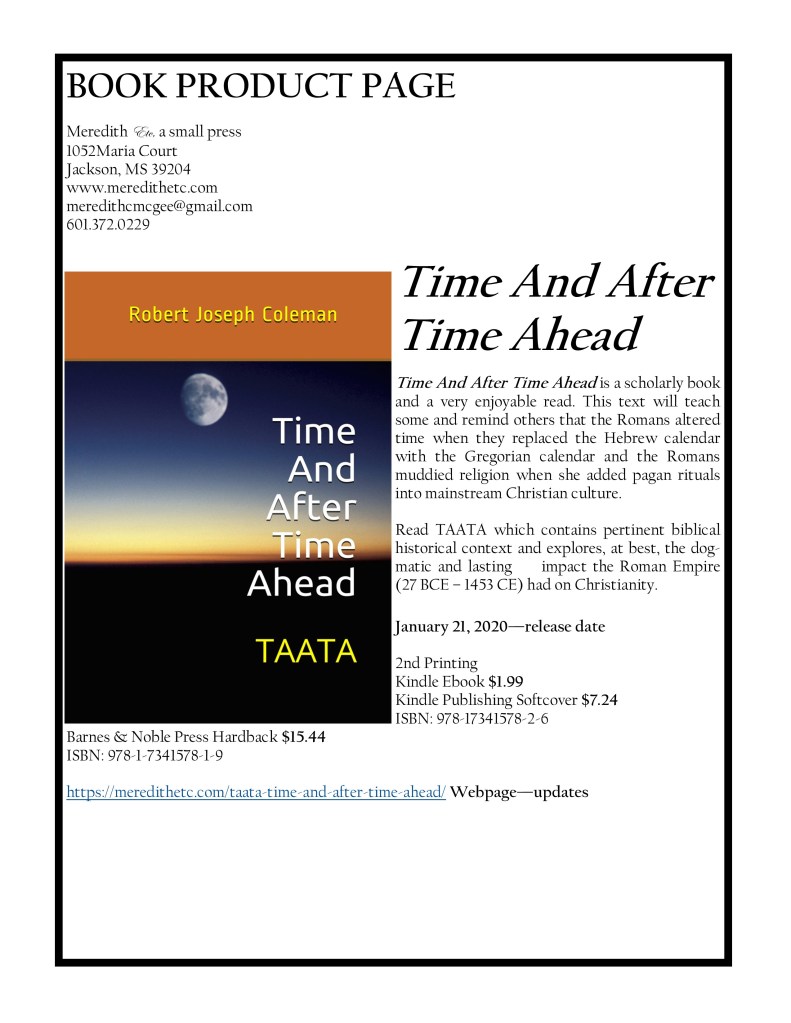
Enjoy “Time And After Time Ahead” by Robert Joseph Coleman.


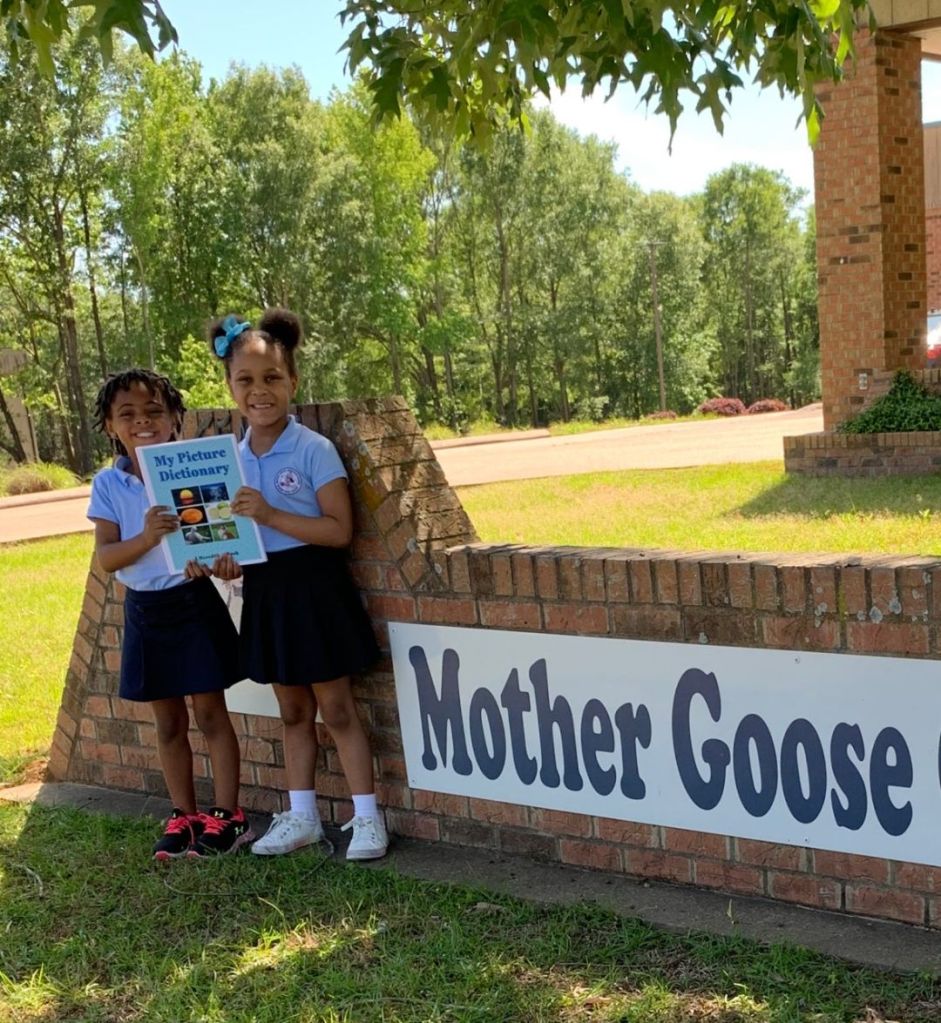
The Community Library Mississippi’s board of directors are pleased Mother Goose Christian School added My Picture Dictionary, a reference book for early learners, to its library. Mother Goose is known for providing outstanding educational services.
Note: A Japanese retailer recently downloaded over 100 My Picture Dictionary eBooks.
The Japan government mandated in 2020 that all high school graduates must achieve a level of English equivalent to B1 of the Common European Framework of Reference for Language (CEFR). https://www.japantimes.co.jp/opinion/2017/10/29/commentary/japan-commentary/japanese-trouble-learning-english/#.XqxcpqjYqUk
Community Library Mississippi is in the process of producing a black & white low cost version of My Picture Dictionary.


Library of Congress Photos of the Influenza Pandemic of 1918-1919 https://www.gjenvick.com/Influenza/ImageLibrary.html click to view pictures…
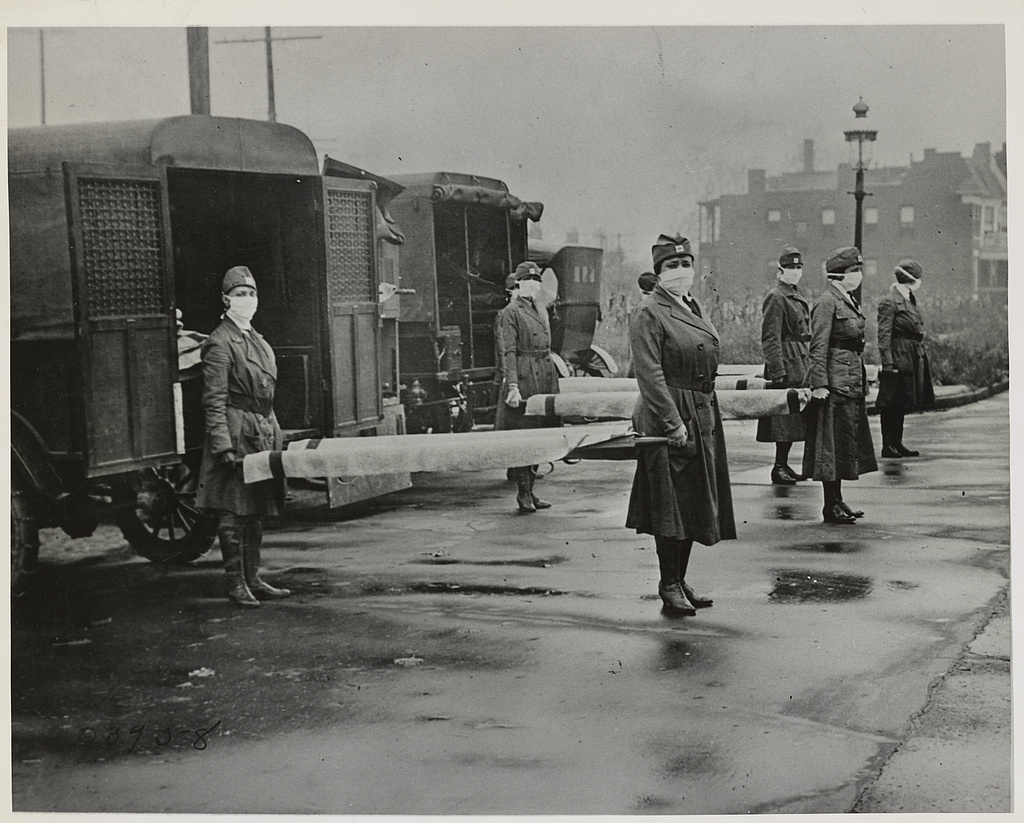
Citizens wore flu masks in public. Citizens had to have on mask to ride street cars. Some made homemade masks. There were three waves of the virus. The virus took the lives of 750,000 USA citizens.
1918 Flu Pandemic spread worldwide during 1918-1919. In the United States, it was first identified in military personnel in spring 1918. Barbers wore face coverings. People also wore homemade masks.
It is estimated that about 500 million people or one-third of the world’s population became infected with this virus. The number of deaths was estimated to be at least 50 million worldwide with about 675,000 occurring in the United States. In the US, the disease devastated cities, forcing law enforcement to ban public meetings, shut down schools, churches, and theaters, and even stop funerals.


https://www.cdc.gov/flu/pandemic-resources/1918-commemoration/historical-images.htm pictures from the 1918-1919 pandemic.

Centers for Disease Control and Prevention, National Center for Immunization and Respiratory Diseases (NCIRD)
When the 1918 influenza epidemic began its deadly tour across the United States, African Americans were already beset by a host of major public health, medical, and social problems that shaped how they experienced the epidemic and how the epidemic affected them. By 1918, medical and public health reports had documented that African Americans suffered higher morbidity and mortality rates than white people for several diseases. The Atlanta Board of Health, for example, reported in 1900 that the black death rate exceeded that of the white death rate by 69%.2 In an analysis of the 1900 census, W.E.B. Du Bois, the influential sociologist and civil rights activist, found that African American death rates were two to three times higher than for white people for several diseases including tuberculosis, pneumonia, and diarrheal disease. Although African Americans had lower rates for scarlet fever, cancer, and liver disease, Du Bois concluded, “The Negro death rate is, however, undoubtedly considerably higher than the white.”3 https://www.ncbi.nlm.nih.gov/pmc/articles/PMC2862340/ Full article Public Health Rep. 2010; 125(Suppl 3): 114–122.
Vanessa Northington Gamble, MD, PhDa

“I really enjoyed reading my children’s book “Nashida: Visits the Smith Robertson Museum for the Digital Media Class at the Legacy of Life Extension Foundation in Brandon, Mississippi,” Meredith Coleman McGee said. Use of the Zoom media platform gives authors, entertainers, teachers, and other professionals access to millions who are at home during the COVID 19 Pandemic. More coming!
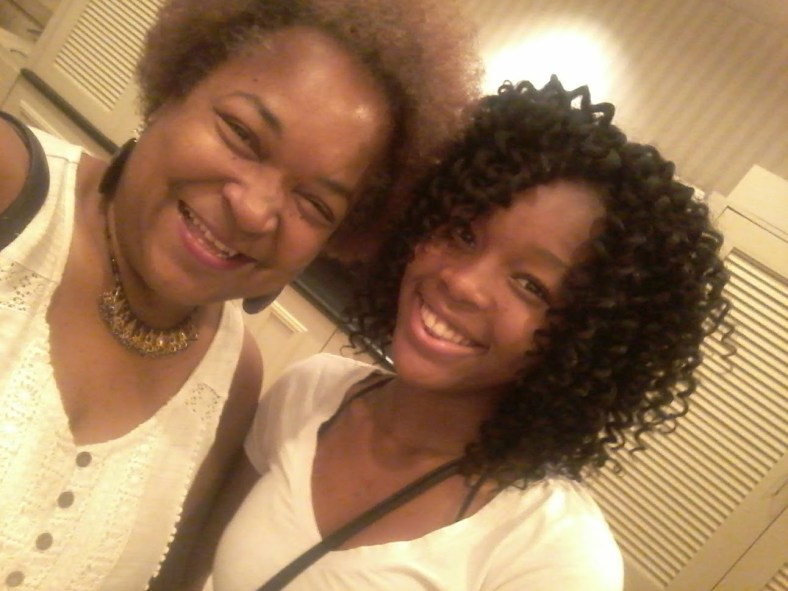
Thank you for purchasing “MY PICTURE DICTIONARY,” a reference book for early learner. “MY PICTURE DICTIONARY” is an important learning aid during this period of digital learning,” Meredith Coleman McGee, Chair, Community Library Mississippi said. This reference book includes pictorial and key definitions of three and four letter words; the back matter features sample sentences, a list of vegetables, a list of fruit and a list of vowels, consonants, pronouns, maps, shapes, and more much.
Consider also “MY FIRST BOOK SERIES” By Hazel Hall et al, “SAVING THE MANATEES” By Janiya Williams, Illustrated by Calla Ridgeway, “MY BROTHER J-BOY” by Hazel Janell Meredith, and Moses Meredith Cultural Arts Children’s Book Series featuring the ‘Nashida‘ character. Nashida teaches culture, civics, and history.
“MY FIRST BOOK SERIES” includes six volumes and six certificates of completion. Children need a pencil and crayons. Children learn unique things such as writing the names of their family on a tree, how to spell ‘Mississippi’ in song, skip counting… Through this is a preschool readiness book, second grade teachers and adult education instructors use it to successfully reteach relevant concepts.
“SAVING THE MANATEES” is a story book about manatees which are marine mammals. Children need a pencil and crayons. Children can color and read. The back matter includes space to write sight words and for learners to practice writing their name in cursive. Reportedly, learners range in age from six to 18 have self taught themselves how to write their name in cursive using the practice writing exercises.
The 1st volume of the Moses Meredith Cultural Arts Book Series is “NASHIDA: VISITS THE SMITH ROBERTSON MUSEUM.” Smith Robertson was a former slave and the first Black lawmaker in the City of Jackson. Historical pictures enhance Nashida’s storytelling. Nashida’s stories include her tour of the Mississippi State Capitol and the Old Capitol Museum.

HISTORY OF THE 1ST BLACK SOLIDARITY DAY 1969

“The first Black Solidarity Day was held on November 3, 1969, against the backdrop of the Black Power Movement and a post-Civil Rights-era America, and it was strategically observed one day prior to Election Day. It was a call to “protest against the intensifying repression that threatens the very existence of black people in America,” stated. Dr. Carlos Russell, an activist, professor, and spokesperson for the Black Solidarity Committee, which was comprised of New York City-based educators, activists, community leaders, and politicians.
On Black Solidarity Day, Black people were asked to stay home, take the day off from work and school, and not shop. The intent was to draw attention to the plight of African Americans who, although having made gains in the Civil Rights Movement, still faced inequality on various socioeconomic levels. Russell extended his accusation of black repression to politicians who ignored the needs of their black constituents.”
by A.J. Muhammad, Librarian, Jean…
View original post 15 more words

“The first Black Solidarity Day was held on November 3, 1969, against the backdrop of the Black Power Movement and a post-Civil Rights-era America, and it was strategically observed one day prior to Election Day. It was a call to “protest against the intensifying repression that threatens the very existence of black people in America,” stated. Dr. Carlos Russell, an activist, professor, and spokesperson for the Black Solidarity Committee, which was comprised of New York City-based educators, activists, community leaders, and politicians.
On Black Solidarity Day, Black people were asked to stay home, take the day off from work and school, and not shop. The intent was to draw attention to the plight of African Americans who, although having made gains in the Civil Rights Movement, still faced inequality on various socioeconomic levels. Russell extended his accusation of black repression to politicians who ignored the needs of their black constituents.”
by A.J. Muhammad, Librarian, Jean Blackwell Hutson Research and Reference, Schomburg Center for Research in Black Culture December 13, 2019


 Meredith Etc